Showing posts with label Info-from-Internet. Show all posts

Saturday, June 22, 2013

Top 10 hospitals in Canada (2013)

From the link: http://www.huffingtonpost.ca/noralou-roos/health-care-in-canada_b_3473935.html

Top 10 hospitals in Canada (2013)

  1. Sturgeon Community Hospital, Alberta
  2. High River General Hospital, Alberta
  3. Banff Mineral Springs Hospital, Alberta (Covenant Health)
  4. Perth and Smiths Falls District Hospital, Ontario
  5. Lamont Health Care Centre, Alberta
  6. Victoria General Hospital, Manitoba
  7. St. Joseph's Healthcare London, Ontario
  8. Chaleur Regional Hospital, New Brunswick
  9. Saskatoon City Hospital, Saskatchewan
  10. Grace Hospital, Manitoba


Wednesday, November 07, 2012

Good book about Healthcare Management Consulting for Doctors entering the field of Management Consulting

This is a good book for those Healthcare professionals (especially doctors) interested in Management Consulting:


Physicians' Pathways To Non-Traditional Careers And Leadership Opportunities.


Thursday, September 13, 2012

Wednesday, February 15, 2012

America has a health care paradox

From the link: http://www.kevinmd.com/blog/2012/02/america-health-care-paradox.html

There is a real PARADOX in American healthcare.

On the one hand we have exceptionally well educated and well trained providers who are committed to our care. We are the envy of the world for our biomedical research prowess, funded largely by the National Institutes of Health and conducted across the county in universities and medical schools. The pharmaceutical industry continuously brings forth life saving and disease altering medications. The medical device industry is incredibly innovative and entrepreneurial. The makers of diagnostic equipment such as CAT scans and hand held ultrasounds are equally productive.

But, on the other hand, there is a dysfunctional health care delivery system.

Our current delivery system focuses on acute medical problems where it is reasonably effective. But it works poorly for most chronic medical illnesses and it costs far too much. When the famous bank robber, Willie Sutton, was asked why he robbed banks he replied “that’s where the money is.” In healthcare the money is in chronic illnesses – diabetes with complications, cardiac diseases such as heart failure, cancer and neurologic diseases. These consume about 75-85% of all dollars spent on medical care. So we need to focus there.

These chronic illnesses are increasing in frequency at a very rapid rate. They are largely (although certainly not totally) preventable. Overeating a non-nutritious diet, lack of exercise, chronic stress, and 20% still smoking are the major predisposing causes of these chronic illnesses. Obesity is now a true epidemic with one-third of us overweight and one-third of us frankly obese. The result is high blood pressure, high cholesterol, elevated blood glucose and toxins that lead to diabetes, heart disease, stroke, chronic lung and kidney disease and cancer.

And once any of these chronic diseases develops, it usually persists for life (of course some cancers are curable but not so diabetes or heart failure). These are complex diseases to treat and expensive to treat – an expense that continues for the rest of the person’s life.

What is needed is aggressive preventive approaches and, for those with a chronic illness, a multi-disciplinary approach, one that has a committed physician coordinator. Providers (and I refer here mostly to primary care physicians), unfortunately, do not give really adequate preventive care in most cases. And they generally do not spend the time needed to coordinate the care of those with chronic illness – which is absolutely essential to assure good quality at a reasonable cost.

When a patient is sent for extra tests, imaging or specialists visits the costs go up exponentially and the quality does not rise with the costs. Indeed it often falls. But primary care physicians are in a non-sustainable business model with today’s reimbursement systems so they find they just do no have enough time for care coordination or more than the basics of preventive care.

So the paradox is that we have the providers, the science, the drugs, the diagnostics and devices that we need for patient care. But we have a new type of disease – complex, chronic illness, mostly preventable, for which we have not established good methods of prevention nor do we care for them adequately once the disease develops. And all of this is exacerbated by an insurance system that puts the incentives in the wrong places. The result is a sicker population, episodic care and expenses that are far greater than necessary.

Sunday, February 05, 2012

The journey of TR Reid to various countries

From the link: http://www.pbs.org/wgbh/pages/frontline/sickaroundtheworld/view/

Reid's first stop is the UNITED KINGDOM, where the government-run National Health Service (NHS) is funded through taxes. "Every single person who's born in the U.K. will use the NHS," says Whittington Hospital CEO David Sloman, "and none of them will be presented a bill at any point during that time."

Often dismissed in America as "socialized medicine," the NHS is now trying some free-market tactics like "pay-for-performance," where doctors are paid more if they get good results controlling chronic diseases like diabetes. And now patients can choose where they go for medical procedures, forcing hospitals to compete head to head.

While such initiatives have helped reduce waiting times for elective surgeries, Times of London health editor Nigel Hawkes thinks the NHS hasn't made enough progress. "We're now in a world in which people are much more demanding, and I think that the NHS is not very effective at delivering in that modern, market-orientated world."

Reid reports next from JAPAN, which boasts the second largest economy and the best health statistics in the world. The Japanese go to the doctor three times as often as Americans, have more than twice as many MRI scans, use more drugs, and spend more days in the hospital. Yet Japan spends about half as much on health care per capita as the United States.

One secret to Japan's success? By law, everyone must buy health insurance -- either through an employer or a community plan -- and, unlike in the U.S., insurers cannot turn down a patient for a pre-existing illness, nor are they allowed to make a profit.

Reid's journey then takes him to GERMANY, the country that invented the concept of a national health care system. For its 80 million people, Germany offers universal health care, including medical, dental, mental health, homeopathy and spa treatment. Professor Karl Lauterbach, a member of the

German parliament, describes it as "a system where the rich pay for the poor and where the ill are covered by the healthy." As they do in Japan, medical providers must charge standard prices. This keeps costs down, but it also means physicians in Germany earn between half and two-thirds as much as their U.S. counterparts.

In the 1990s, TAIWAN researched many health care systems before settling on one where the government collects the money and pays providers. But the delivery of health care is left to the market. Every person in Taiwan has a "smart card" containing all of his or her relevant health information, and bills are paid automatically. But the Taiwanese are spending too little to sustain their health care system, according to Princeton's Tsung-mei Cheng, who advised the Taiwanese government. "As we speak, the government is borrowing from banks to pay what there isn't enough to pay the providers," she told FRONTLINE.

Reid's last stop is SWITZERLAND, a country which, like Taiwan, set out to reform a system that did not cover all its citizens. In 1994, a national referendum approved a law called LAMal ("the sickness"), which set up a universal health care system that, among other things, restricted insurance companies from making a profit on basic medical care. The Swiss example shows health care reform is possible, even in a highly capitalist country with powerful insurance and pharmaceutical companies.

Today, Swiss politicians from the right and left enthusiastically support universal health care. "Everybody has a right to health care," says Pascal Couchepin, the current president of Switzerland. "It is a profound need for people to be sure that if they are struck by destiny ... they can have a good health system."

OECD Web book contents

Table of contents

Access all indicators below via the web book.

Chapter 1. Health Status
  • Life expectancy at birth
  • Premature mortality
  • Mortality from heart disease and stroke
  • Mortality from cancer
  • Mortality from transport accidents
  • Suicide
  • Infant mortality
  • Infant health: Low birth weight
  • Perceived health status
  • Diabetes prevalence and incidence
  • Cancer incidence
  • AIDS incidence and HIV prevalence
Chapter 2. Non-medical Determinants of Health
  • Tobacco consumption among adults
  • Alcohol consumption among adults
  • Overweight and obesity among adults
  • Overweight and obesity among children
Chapter 3. Health Workforce
  • Employment in the health and social sectors
  • Medical doctors
  • Medical graduates
  • Remuneration of doctors (general practitioners and specialists)
  • Gynaecologists and obstetricians, and midwives
  • Psychiatrists
  • Nurses
  • Nursing graduates
  • Remuneration of nurses
Chapter 4. Health Care Activities
  • Consultations with doctors
  • Medical technologies
  • Hospital beds
  • Hospital discharges
  • Average length of stay in hospitals
  • Cardiac procedures (coronary angioplasty)
  • Hip and knee replacement
  • Treatment of renal failure (dialysis and kidney transplants)
  • Caesarean sections
  • Cataract surgeries
  • Pharmaceutical consumption
Chapter 5. Quality of Care
  • Care for chronic conditions
    - Avoidable admissions: Respiratory diseases
    - Avoidable admissions: Uncontrolled diabetes
  • Care for acute exacerbation of chronic conditions
    - In-hospital mortality following acute myocardial infarction
    - In-hospital mortality following stroke
  • Patient safety
    - Obstetric trauma
    - Procedural or postoperative complications
  • Care for mental disorders
    - Unplanned hospital re-admissions for mental disorders
  • Cancer care
    - Screening, survival and mortality for cervical cancer
    - Screening, survival and mortality for breast cancer
    - Survival and mortality for colorectal cancer
  • Care for communicable diseases
    - Childhood vaccination programmes
    - Influenza vaccination for older people
Chapter 6. Access to Care
  • Unmet health care needs
  • Coverage for health care
  • Burden of out-of-pocket health expenditure
  • Geographic distribution of doctors
  • Inequalities in doctor consultations
  • Inequalities in dentist consultations
  • Inequalities in cancer screening
  • Waiting times
Chapter 7. Health Expenditure and Financing
  • Health expenditure per capita
  • Health expenditure in relation to GDP
  • Health expenditure by function
  • Pharmaceutical expenditure
  • Financing of health care
  • Trade in health services (medical tourism)
Chapter 8. Long-term Care
  • Life expectancy and healthy life expectancy at age 65
  • Self-reported health and disability at age 65
  • Prevalence and economic burden of dementia
  • Recipients of long-term care
  • Informal carers
  • Long-term care workers
  • Long-term care beds in institutions and hospitals
  • Long-term care expenditure)

HEALTH AT A GLANCE 2011: OECD INDICATORS

OECD Indicators are a great source of information for doing research and for general knowledge. You can find some info from the link:  http://www.oecd.org/document/11/0,3746,en_2649_37407_16502667_1_1_1_37407,00.html

Graphs: US Health Stats compared to other countries

From the link: http://www.pbs.org/wgbh/pages/frontline/sickaroundtheworld/etc/graphs.html


VERY Useful readings about Healthcare Management

From the link: http://www.pbs.org/wgbh/pages/frontline/sickaroundtheworld/etc/links.html

+Health Care and the 2008 Election
+General Analysis of the Health Care Issue
+Health Care Foundations, Think Tanks and Interest Groups
+The International Perspective

Details:

Health Care and the 2008 Election
  • Hillary Clinton's "American Health Choices Plan"
    Sen. Clinton supports an individual mandate requiring everyone to buy health insurance, either through their existing provider, from "the quality private insurance options that members of Congress receive," or from a public plan option similar to Medicare. Her plan doesn't include any mechanism for enforcing that mandate, although when pressed, Clinton has said she is open to a variety of methods, including garnishing employees' wages if they do not obtain health care. Read her entire plan (PDF file).

  • "Hillary Clinton Unveils a Promising Health Plan"
    A Sept. 2007 analysis by The Economist of Sen. Clinton's health care reform proposal.

  • "Hillary and Health Care"
    From the NPR program On Point, a one-hour radio discussion of Sen. Clinton's plan, featuring journalists and health policy advisers to the Obama and Clinton campaigns (Sept. 2007).

  • Barack Obama's "Plan for a Healthy America"
    Sen. Obama wants to provide "quality, affordable and portable coverage for all," but his plan falls short of Clinton's universal coverage -- it wouldn't require everyone to have insurance, just all children. And as with Clinton's plan, his offers no enforcement mechanism. Read his entire plan (PDF file).

  • "Obama v. Clinton on 'Universality'"
    Slate's Timothy Noah analyzes the differences between the two candidates and outlines his own thoughts on getting to universal coverage (Nov. 30, 2007).

  • "Clinton, Obama, Insurance"
    Paul Krugman compares the health care plans of the two candidates in this Feb. 4, 2008, New York Times op-ed piece: "The big difference is mandates: the Clinton plan requires that everyone have insurance; the Obama plan doesn't."

  • John McCain's "Straight Talk on Health System Reform"
    Sen. McCain focuses on marketplace competition, which he believes will contain the rapidly rising cost of health care as well as make health care more affordable. His plan would replace employer-provided health insurance with a tax credit for individuals and families to buy their health insurance from any provider. But his plan doesn't require anyone to get insurance, nor does it prevent insurance companies from denying coverage to those with pre-existing medical problems. To lower health care costs, McCain also supports improved information technology, more transparency about the quality and cost of care, and tort reform to "eliminate frivolous lawsuits" against doctors.

  • "Why McCain Has the Best Health Care Plan"
    Fortune editor-at-large Shawn Tully compares McCain's proposal to create "a kind of national insurance market" to the Democrats' "Medicare-like federal superprogram." His conclusion: "Both have huge flaws, but on balance McCain's is better," because "it puts the consumer in charge" (March 11, 2008).

  • "John McCain's Health Proposals Are Bad News for Big Pharma"
    The Economist examines measures that McCain endorsed in the Senate that "place him closer to the Democratic contenders on health policy than to any of his Republican rivals for the nomination" (March 2008).

  • "Voodoo Health Economics"
    Paul Krugman's April 2008 New York Times op-ed piece lambasting McCain's free-market approach to delivering health care.

  • "Fixing It: Health Care Policy"
    From a 10-part Slate series offering advice to the next president, Ezra Klein lays out a guide to the politics of health care. Among his suggestions: "Do it first, don't write a bill, and let someone else take the credit." Klein also blogs about health care and politics for the left-leaning American Prospect.

  • "Health Policy Reform in the 2008 Election Season"
    The Commonwealth Fund -- an organization that supports independent research on health care issues and a funder of this FRONTLINE report -- offers a comparison of the candidates' proposals and opinion polls asking the public and health care experts what they think of the candidates' plans.

  • Health08.org
    This Web site run by the Kaiser Family Foundation -- which awarded correspondent T.R. Reid a Kaiser Media Fellowship in support of his work on this report -- tracks the health care issue in the 2008 campaign. Features side-by-side summaries of the candidates' positions and video forums with the candidates. Kaiser also cosponsored, with Harvard and NPR, a poll of primary voters which found broad support for requiring health insurance, but opposition to fining or otherwise punishing those who don't get coverage.


  • General Analysis of the Health Care Issue
  • "Health Care and the Presidential Race: Arguing Over the Care"
    The Economist offers a pithy December 2007 overview of the thorny issues, informed by what some polls are indicating.

  • "Scalpel Please"
    The Economist reports from California on that state's recent failed legislation to provide universal health care coverage.

  • "The Health Care Crisis and What to Do About It"
    A lucid and thought-provoking essay by Robin Wells and Paul Krugman in the March 2006 New York Review of Books.

  • "Real Issues: Health Care Costs"
    A one-hour discussion from NPR's On Point on the escalating costs of health care and the ramifications (Feb. 2008).

  • "Rising Health Costs Cut into Wages"
    A Washington Post article on another reason runaway health costs are becoming an economic and political issue: they're contributing to the problem of stagnating wages.

  • "Creative Destruction"
    The New Republic's Jonathan Cohn uses former TNR editor Michael Kinsley treatment for Parkinson's disease as a starting point for dissecting "the best case against universal health care": that a system responsible for providing care for all might stifle innovative but expensive care. Cohn has also written a book about the problems with American health care; listen to an interview with him discussing that topic from the NPR program Fresh Air.

  • "Flashback: And Health Care For All"
    For the release of Michael Moore's documentary Sicko, The Atlantic combed its archives for articles critical of health care in America. The pieces they unearthed range from a 1910 critique of medical education up to an analysis of European health care circa 1960.

  • "Dust-Up: Healthcare Reform"
    In February 2007, the Los Angeles Times ran this five-part debate over California Gov. Arnold Schwarzenegger's universal health care plan between a member of the governor's staff and an opponent of the plan. The topics discussed include the role of insurance in health care reform and the problem of insuring illegal immigrants. In January 2008, a compromise bill crafted by Schwarzenegger and the speaker of the California Assembly was rejected by a state Senate committee.

  • "In Massachusetts, Universal Coverage Strains Care"
    Unlike California, Massachusetts managed to pass universal health insurance. But more applicants than anticipated have signed up for coverage, overburdening the commonwealth's primary care physicians, reports Kevin Sack in the April 5, 2008, New York Times. And the AP reports that the Massachusetts program is costing more than expected, forcing lawmakers to consider a $1-per-pack hike to the state's cigarette tax.


  • Health Care Foundations, Think Tanks and Interest Groups
  • Cato Institute: Universal Health Care
    The libertarian Cato Institute favors free-market health care reforms and is skeptical that other nations' health care programs are better than the United States'. Michael Tanner, Cato's director of health and welfare studies, argues that other countries' health care programs "demonstrate the failure of centralized command and control and the benefits of increasing consumer incentives and choice." And economist Glen Whitman takes issue with the World Health Organization's low ranking of the U.S. health care system.

  • America's Health Insurance Plans' "Plan to Cover the Uninsured"
    Any attempt to fix U.S. health care will mean changes for the nation's health insurance companies, so it is not surprising that the industry's lobbying group has put forth its own reform proposal. The gist of their plan: States should create "Guarantee Access Plans" to cover the uninsured with the highest medical costs, and in return, private health insurers will guarantee coverage to all other applicants. Read the full proposal (PDF file) online, along with their take on why health care costs are rising.

  • The Henry J. Kaiser Family Foundation
    The Kaiser Foundation -- which awarded correspondent T.R. Reid a Kaiser Media Fellowship in support of his work on this report -- provides free information on health care through a network of Web sites and partnerships with media organizations. It offers primers on various facets of the U.S. health care system, including Medicare, the rising cost of health care and the uninsured. Kaiser also runs statehealthfacts.org, which compiles health data for all 50 states, and publishes the free Daily Health Policy Report.

  • Commonwealth Fund
    The Commonwealth Fund -- a funder of this FRONTLINE report -- is "a private foundation working toward a high performance health system." To that end, the group established a commission in 2005 to study U.S. health care reform. Read the commission's initial report and its National Scorecard on U.S. Health System Performance, on which the United States scored a 66 out of a possible 100. The fund's site also features an interactive Web feature exploring various options for fixing the U.S. health care system, and a state-by-state health care scorecard.

  • The Dartmouth Atlas of Health Care 2008
    A project of the Dartmouth Institute for Health Policy and Clinical Practice, the atlas documents "glaring variations in how medical resources are distributed and used in the United States." The 2008 atlas and its executive summary are available for download (PDF files), but the highlight of the site is the set of interactive data tools that allows users to produce custom reports comparing states, or even individual hospitals.

  • Brookings Institution Engelberg Center for Health Care Reform
    The Engelberg Center "serves as the 'hub' of all Brookings activity related to health policy." Its home page features a Candidate Issue Index, part of a joint project with ABC News comparing the health care plans of Hillary Clinton, Barack Obama and John McCain, and commentary from the think tank's scholars.


  • The International Perspective
  • Organisation for Economic Co-operation and Development (OECD)
    The Paris-based OECD publishes international statistics on a variety of economic issues, including health policy. In Health at a Glance 2007, it collects data on a wide range of health care indicators from its 30 member nations. From that data the OECD also publishes reports on individual countries, including this précis on the United States (PDF file).

  • World Health Organization (WHO)
    Part of the United Nations, the WHO is the group whose World Health Report ranked the U.S. health care system 37th in the world in 2000. The WHO has not revisited those rankings since then, but it maintains the WHOSIS online database of international health statistics and publishes an annual World Health Statistics Report.

  • NHS Choices
    The rebranded homepage of the United Kingdom's National Health Service reflects the April 2008 launch of Patient Choice, a program that allows Britons to compare hospitals, choose which specialists they wish to see, and book appointments online. It's the latest attempt by the mostly socialized NHS to introduce some market competition into health care delivery. The NHS site also features a guide to common health problems and advice on healthy living.
  • Four Models of Healthcare as per T.R. Reid

    4 models of healthcare:
    http://www.pbs.org/wgbh/pages/frontline/sickaroundtheworld/countries/models.html
    1. Beveridge Model
    2. Bismarck Model
    3. National Health Insurance Model
    4. Out of Pocket model
    Details:
    There are about 200 countries on our planet, and each country devises its own set of arrangements for meeting the three basic goals of a health care system: keeping people healthy, treating the sick, and protecting families against financial ruin from medical bills.

    But we don't have to study 200 different systems to get a picture of how other countries manage health care. For all the local variations, health care systems tend to follow general patterns. There are four basic systems:

    Beveridge Model
    Named after William Beveridge, the daring social reformer who designed Britain's National Health Service. In this system, health care is provided and financed by the government through tax payments, just like the police force or the public library.

    Many, but not all, hospitals and clinics are owned by the government; some doctors are government employees, but there are also private doctors who collect their fees from the government. In Britain, you never get a doctor bill. These systems tend to have low costs per capita, because the government, as the sole payer, controls what doctors can do and what they can charge.

    Countries using the Beveridge plan or variations on it include its birthplace Great Britain, Spain, most of Scandinavia and New Zealand. Hong Kong still has its own Beveridge-style health care, because the populace simply refused to give it up when the Chinese took over that former British colony in 1997. Cuba represents the extreme application of the Beveridge approach; it is probably the world's purest example of total government control.


    Bismarck Model
    Named for the Prussian Chancellor Otto von Bismarck, who invented the welfare state as part of the unification of Germany in the 19th century. Despite its European heritage, this system of providing health care would look fairly familiar to Americans. It uses an insurance system -- the insurers are called "sickness funds" -- usually financed jointly by employers and employees through payroll deduction.

    Unlike the U.S. insurance industry, though, Bismarck-type health insurance plans have to cover everybody, and they don't make a profit. Doctors and hospitals tend to be private in Bismarck countries; Japan has more private hospitals than the U.S. Although this is a multi-payer model -- Germany has about 240 different funds -- tight regulation gives government much of the cost-control clout that the single-payer Beveridge Model provides.

    The Bismarck model is found in Germany, of course, and France, Belgium, the Netherlands, Japan, Switzerland, and, to a degree, in Latin America.

    National Health Insurance Model
    This system has elements of both Beveridge and Bismarck. It uses private-sector providers, but payment comes from a government-run insurance program that every citizen pays into. Since there's no need for marketing, no financial motive to deny claims and no profit, these universal insurance programs tend to be cheaper and much simpler administratively than American-style for-profit insurance.

    The single payer tends to have considerable market power to negotiate for lower prices; Canada's system, for example, has negotiated such low prices from pharmaceutical companies that Americans have spurned their own drug stores to buy pills north of the border. National Health Insurance plans also control costs by limiting the medical services they will pay for, or by making patients wait to be treated.

    The classic NHI system is found in Canada, but some newly industrialized countries -- Taiwan and South Korea, for example -- have also adopted the NHI model.

    Out of Pocket model
    Only the developed, industrialized countries -- perhaps 40 of the world's 200 countries -- have established health care systems. Most of the nations on the planet are too poor and too disorganized to provide any kind of mass medical care. The basic rule in such countries is that the rich get medical care; the poor stay sick or die.

    In rural regions of Africa, India, China and South America, hundreds of millions of people go their whole lives without ever seeing a doctor. They may have access, though, to a village healer using home-brewed remedies that may or not be effective against disease.

    In the poor world, patients can sometimes scratch together enough money to pay a doctor bill; otherwise, they pay in potatoes or goat's milk or child care or whatever else they may have to give. If they have nothing, they don't get medical care.

    These four models should be fairly easy for Americans to understand because we have elements of all of them in our fragmented national health care apparatus. When it comes to treating veterans, we're Britain or Cuba. For Americans over the age of 65 on Medicare, we're Canada. For working Americans who get insurance on the job, we're Germany.

    For the 15 percent of the population who have no health insurance, the United States is Cambodia or Burkina Faso or rural India, with access to a doctor available if you can pay the bill out-of-pocket at the time of treatment or if you're sick enough to be admitted to the emergency ward at the public hospital.

    The United States is unlike every other country because it maintains so many separate systems for separate classes of people. All the other countries have settled on one model for everybody. This is much simpler than the U.S. system; it's fairer and cheaper, too.

    Can USA learn something from the REST of the world about how to more efficiently run a Healthcare System? YES !

    Check out the link: http://www.pbs.org/wgbh/pages/frontline/sickaroundtheworld/

    5 Capitalist democracies and how they do it: http://www.pbs.org/wgbh/pages/frontline/sickaroundtheworld/countries/
    1. UK
    2. Japan
    3. Germany
    4. Taiwan
    5. Switzerland
    Interviews: http://www.pbs.org/wgbh/pages/frontline/sickaroundtheworld/interviews/

    How does it work for the doctors in these 5 countries?
    http://www.pbs.org/wgbh/pages/frontline/sickaroundtheworld/themes/doctors.html

    What lessons can USA learn from other countries?
    http://www.pbs.org/wgbh/pages/frontline/sickaroundtheworld/themes/lessons.html

    Does Universal coverage mean Socialized Medicine?
    http://www.pbs.org/wgbh/pages/frontline/sickaroundtheworld/themes/socialized.html

    What about the "Cost of Drugs" issue?
    http://www.pbs.org/wgbh/pages/frontline/sickaroundtheworld/themes/drug.html

    Questions & Answers with Mr. T.R. Reid, author:
    http://www.pbs.org/wgbh/pages/frontline/sickaroundtheworld/etc/notebook.html

    TR Ried in India for Ayurvedic treatment ---> A video:
    http://www.pbs.org/frontlineworld/stories/india701/video/video_index.html

    About Ayurveda:
    http://www.pbs.org/frontlineworld/stories/india701/interviews/ayurveda101.html

    4 models of healthcare:
    http://www.pbs.org/wgbh/pages/frontline/sickaroundtheworld/countries/models.html

    Saturday, February 04, 2012

    http://www.healthcareadministration.com/ ---> A useful site for Healthcare Management Professionals

    Link: http://www.healthcareadministration.com/

    Related Articles:

    Wonderful lines from the movie "SICKO" by Michael Moore.

    From the link: http://www.imdb.com/title/tt0386032/quotes

    You know, when we see a good idea from another country, we grab it. If they build a better car, we drive it. If they make a better wine, we drink it. So if they've come up with a better way to treat the sick, to teach their kids, to take care of their babies, to simply be good to each other, then what's our problem? Why can't we do that? They live in a world of 'we', not 'me'. We'll never fix anything until we get that one basic thing right. And powerful forces hope that we never do. And that we remain the only country in the western world without free, universal health care. You know, if we ever did remove the chokehold of medical bills, college loans, daycare, and everything else that makes us afraid to step out of line, well, watch out. Cause it will be a new day in America.

    Friday, January 27, 2012

    The Medical Cartel: Why are MD Salaries So High?

    From the link: http://wallstreetpit.com/5769-the-medical-cartel-why-are-md-salaries-so-high

    Interesting post about why doctor salaries are high in USA.

    Supply of nurses rises in Canada; 25 per cent growth in nurse practitioners

    From the link: http://ca.news.yahoo.com/supply-nurses-rises-canada-25-per-cent-growth-200409270.html

    TORONTO - Nurse practitioners are steadily gaining ground in Canada, according to a snapshot of nursing that shows overall growth of the workforce.

    An annual report released Thursday by the Canadian Institute for Health Information said there were 354,910 regulated nurses working in Canada in 2010, an increase of 8.8 per cent since 2006.

    "Between 2009 and 2010, the nursing supply increased by two per cent, so if you look at the population, it increased by one per cent approximately, so we're seeing double the growth there," said Carol Brule, the institute's manager of health human resources.

    The report on the supply of registered nurses, licensed practical nurses, nurse practitioners and registered psychiatric nurses is important for planning and policy decision-makers, she said.

    Nurse practitioners have extra training that allows them to order certain diagnostic tests, perform some procedures and prescribe drugs and other therapies. Although their ranks are still small, the report shows they increased by 25 per cent in 2010, to 2,486.

    Brule called it an "emerging profession" with a complementary role.
    "They can work as part of health-care teams. They certainly have a very key role to play — they can support the work of physicians," Brule noted.

    Canadian Nurses Association president Judith Shamian said it goes back to a simple message that there are about five million Canadians who don't have access to primary care — and nurse practitioners can provide that service.

    She heralded the size of the increase in Ontario but said growth has been slower in other provinces.
    "So the 25 per cent — hallelujah! Do we need to keep up the 25 per cent? We need to keep it up until all Canadians have proper access, and not just access, but timely access."

    She also welcomed the overall growth in the nursing supply, but indicated nothing is simple in analysis of the statistics.

    A report from her association a couple of years ago projected a growing shortage of nurses, yet the situation is confusing because there are nurses who say they cannot find full-time jobs.
    "So it's kind of a mixed bag of things," Shamian said from Ottawa. "You will find in most organizations a fair amount of vacancies, but they might not be desired positions."

    Shamian said she often hears that new graduates are working in multiple clinical areas or at more than one institution to pay their bills — making it more difficult to gain expertise in a specific discipline.
    "You cannot become an expert if one day you work in maternity, the other day you work in the long-term care, and then you are in emergency room," she said, referencing the phrase "jack of all trades, master of none."

    "So it's not the way to build an important workforce and a professional workforce. So yes, we have a lot more work to do in this area."
    She said that in some provinces, it's difficult to recruit home care nurses because the salaries are often lower than in acute care.

    "The number of registered nurses working in long-term care went down which is not good, because the people who go into long-term care facilities are sicker and sicker," she noted.
    "But it's not clear to me if the numbers went down because there are vacancies or because long-term care facilities are replacing registered nurses with practical nurses, which are a cheaper workforce.
    "And if that's the case, then it's a policy problem."

    In terms of mobility, Brule said the "magnet provinces" of British Columbia, Alberta and Ontario were the top three destinations for work for Canadian-educated nurses who left their jurisdiction of graduation.

    The age for nurses entering the workforce is often 30 or older, she said, and the 40-to-59 age group dominates the profession.

    A breakdown shows that three-quarters of regulated nurses were RNs in 2010, while 23 per cent were licensed practical nurses and 1.5 per cent were registered psychiatric nurses. Those proportions have remained steady for the last five years.

    There were 787 registered nurses per 100,000 population in Canada in 2010, the report said. In the early 1990s, there were 824 RNs per 100,000 population — a ratio that has not been achieved since that time.

    Shamian said she's concerned that the number of managers has been going down every year.
    "A manager — we have research — should be providing leadership to anywhere between 40 to 50 individuals, and if you don't have managers, then they cannot nurture and help the new graduates," she said.

    Supply of doctors at an all time high and a glut may be on the horizon

    From the link: http://ca.news.yahoo.com/supply-doctors-time-high-glut-may-horizon-200354011.html

    Now they say that there is an excerss of doctors !!! Can you believe this ?!!!

    TORONTO - The doctor shortage of a few years ago is being resolved and Canada could be heading towards a glut of physicians, data in a new report on the supply of doctors suggest.

    The number of practising doctors in Canada is at an all-time high, with nearly 70,000 active physicians working in the country last year. Out-migration of doctors has declined, licensing of international medical graduates has increased and medical schools are pumping out record numbers of new doctors, said the report by the Canadian Institute for Health Information.

    "I think the actual story here is — boy, this was all so predictable and guess what? It's all coming to pass," said Dr. Morris Barer, a health policy analyst with the University of British Columbia's Centre for Health Services and Policy.

    "The die has been cast, our future has been set in stone, and now we watch. And I think the people who should be really worried are the funders and policy makers across the country — because the cost pressures are going to increase dramatically."

    Barer doesn't think Canada currently has a glut, but he's not sure the country had a shortage a few years ago either. He said there is no magic formula for figuring out what the right number of doctors is for a country.

    "Too many factors need to be taken into account in thinking about that and I don't think that there's any science that could ever determine that for you," he said.

    "It's partly a function of what you're willing to pay for and what sorts of other personnel you're prepared to train to provide certain parts of health care."

    But more doctors probably means the push to rationalize the delivery of care by devolving some tasks to other health-care personnel — nurse practitioners or physician assistants — may suffer, Barer suggested.

    Health economist Arthur Sweetman doesn't believe Canada has a glut of doctors yet either, but suggests it might be headed that way, with large medical school intakes still underway.

    The problem isn't just about how many doctors the country has, but where they are practising and what their specialty is, he said, suggesting the country may be training too many pediatricians and too few gerontologists, ophthalmologists and orthopedic surgeons to cope when baby boomers become senior citizens.

    "We have the short-term glasses on right now. We need to maybe put the long-term glasses on," said Sweetman, a member of CHEPA — the Centre for Health Economics and Policy Analysis — at McMaster University in Hamilton.

    "Are are we still going to need the really high numbers that we're allowing into medical school now in eight or 10 years?" he questioned. "We need to be planning a decade ahead, because it takes a decade to train a physician."

    Health economists have warned that in a system that is still largely based on paying doctors a fee for every service they do, an oversupply of doctors could see more doctors doing more tests and procedures on a smaller number of patients each in order to ensure they earn a decent living.

    The report on the supply of doctors was released in tandem with one that delves into what provinces and territories pay doctors.

    Trying to arrive at a representative figure is complicated because the health statistics agency doesn't get enough data to report on one stream that makes up about 25 per cent of the payments from provinces and territories to doctors, said Yvonne Rosehart, program lead for the physician team in CIHI's health human resources unit.

    CIHI calls that stream "alternative" payments, referring to monies paid to doctors who are on salaries in family practices, who get bonuses to work in rural areas where the fee-for-service model doesn't really work, or who get other types of bonuses.

    The remaining 75 per cent of payments to doctors covers fee-for-service billings.
    Some doctors would make most of their income through the fee-for-service, but others would receive payments through a mixture of the two. For instance, some physicians may work the occasional hospital shift in addition to their private practice, earning a salary per shift for the one and fee-for service payments for the other, Sweetman said.

    Looking at only the fee-for-service numbers, the agency estimates that on average family doctors earned a gross income of $239,000 last year and specialists earned a gross of $341,000.

    Those figures would not be a doctor's actual income — a doctor who ran his or her own office would have to cover the office overhead out of those gross figures, Rosehart said.

    The report said doctors' salaries increased by 7.4 per cent in 2010, down slightly from the 9.7 per cent and 8.8 per cent increases of the previous two years.

    In terms of numbers, there were 203 physicians for every 100,000 Canadians in 2010, up 35 per cent from the rate in 1980. The number of doctors per 100,000 Canadians rose in all provinces and territories — except Yukon and Northwest Territories — over the past five years.

    Wednesday, January 04, 2012

    Executive compensation at Ornge, Canada

    Ontarians can find out that the chief operating officer made $282,000 in 2010. But they can’t find out what Dr. Chris Mazza, the president and chief executive officer, makes. Why? Because ORNGE has broken up its business into a not-for-profit that provides air ambulance services to the province and for-profit companies that pursue other ventures. Mazza, according to the company, primarily works for the latter and therefore is exempt from disclosing his salary. It’s such a “complicated corporate structure” that Matthews says she needs help to “better understand why it is that all salaries at ORNGE are not covered in the (public disclosure) act.” Boy, with my MBA and Medical Background, I could handle the reins of a business executive at Ornge for much less money :)

    Thursday, December 29, 2011

    ORNGE recently spent $600,000 on degrees for 7 top executives. Excellent investment, folks :)

    From the link:
    http://www.thestar.com/news/canada/politics/article/1108186--star-investigation-ornge-spends-600-000-on-degrees-for-top-executives?bn=1

    Quote: 
    The ORNGE air ambulance service has recently spent more than $600,000 on university business degrees for top executives. In the last year, at least seven ORNGE officials have received or are enrolled in an executive MBA from a top Canadian business school. An ORNGE spokesman defended the practice, saying the executives are “high performers” and funding the business degrees helps ORNGE “attract and retain top quality talent.” ORNGE, which employs 400 people, receives $150 million in public funding each year.

    The business schools include:
    Schulich School of Business
    Ivey School of Business
    Business School in Brussels

    What I understand ----> MBAs are valuable and well respected in the Healthcare Management Industry.


    Tuesday, December 20, 2011

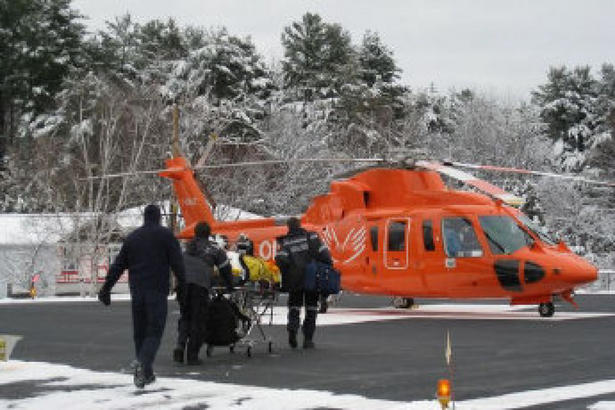
    Shortage of paramedics leaves ORNGE helicopter idle

    From the link: http://www.thestar.com/news/canada/article/1104576--shortage-of-paramedics-leaves-ornge-helicopter-idle?bn=1

    The air ambulance helicopter at ORNGE’s Thunder Bay base was grounded hundreds of times this year because no paramedics were available for emergency flights.

    “No medics again,” the helicopter pilot recorded in his flight log, listing a nine-hour span when the helicopter and its two pilots were forced to sit idle in a hanger, unable to answer emergency calls.

    ORNGE, paid $150 million annually by Ontario, has a helicopter and two airplanes at its key northern base but only enough paramedics for two of the aircraft.

    ORNGE insiders have told the Star the frequent removal of medics from the helicopter is risky because only a chopper can provide service if there is a road accident or injury in a remote area. ORNGE airplanes typically move patients from one hospital to another.

    “Medics poached,” another chopper pilot wrote in the electronic log book in May, recording a seven-hour lapse in service.

    ORNGE spokesman James MacDonald said paramedics are not “vehicle specific.”
    He said the paramedics staff the vehicle most appropriate for a trip. ORNGE will not provide the Star with any information on specific emergency calls that may have come in when the helicopter was unavailable.

    The Star has been unable to determine if emergency calls came in for the helicopter during the time it was listed as unavailable.

    Helicopter log entries obtained by the Star show there were 237 times over 10 months between February and November 2011 that the Sikorsky air ambulance helicopter and its two pilots sat in Thunder Bay listed as out of service. Without paramedics the pilots are unable to pick up injured patients and must notify the Toronto command centre they are unavailable.

    The pilot logs, filed to ORNGE’s communication centre in Toronto, reveal that over the 10 months the chopper was grounded a total of 1,300 hours or 47 days — as many as 28 hours in one case in September. The average time the chopper was unavailable was five hours.

    ORNGE’s Thunder Bay “Transport Medicine Centre for Excellence” was opened in late 2010 with much fanfare, promising the “highest level of medical care” for Ontario’s northern residents. Sixty per cent of ORNGE’s flights are north of Sudbury. The union that represents the paramedics is concerned that ORNGE’s decision has or will affect patients.

    Ron Smith, director of transportation for a unit of the Canadian Auto Workers representing ORNGE’s 170 paramedics, said he knew this was a problem but did not know the chopper was out of service so many times. Smith said that an extra team of paramedics should be based in Thunder Bay to ensure the helicopter is always staffed. “If someone needs the helicopter it will be for an emergency like an accident on a road or in the bush where a plane cannot land.”

    “It’s also a waste of public money,” Smith said. “You have a helicopter and two pilots sitting there unable to do their jobs.” To prepare this story the Star has spoken to a dozen ORNGE insiders. None of them can be identified because they have all been required to sign non-disclosure agreements and say that if they were named they would be fired and sued by the company. ORNGE spokesman MacDonald confirmed the existence of non-disclosure agreements and said that is part of their agreement with the province of Ontario and is in place to protect confidentiality of patients.

    ORNGE spokesman MacDonald said last week that ORNGE places “paramedics on the most appropriate and efficient vehicle to meet the patients needs.” He said airplanes are often the better choice because they can fly longer than helicopters and in more adverse weather.

    MacDonald emailed the Star Monday to cancel a scheduled interview with ORNGE’s president Chris Mazza, saying that “we are not satisfied that the Star intends to fairly and responsibly report on ORNGE.” MacDonald’s email came the day the Star published a story revealing that a group of ORNGE executives, including Mazza, work for a for-profit consulting company that has a $6.7 million contract to provide marketing services for AgustaWestland, the company that sold 10 helicopters to ORNGE for $120 million.
    Later in the day Monday, MacDonald emailed a follow-up response regarding the Star’s earlier questions about Thunder Bay and the lack of paramedics for the helicopter.

    “Your question describes a scenario that applies to all of our resources: if they already have a patient on board, then that aircraft — fixed or rotor — is unavailable for another call until the current patient is handed over to the hospital,” MacDonald wrote. “We believe the facts speak for themselves: our Thunder Bay crews have the ability to respond on either aircraft as appropriate; triage decisions are backed by transport medicine physicians; as a result of this system, we reached 57 per cent more patients from this base with the same funding. This clearly has had a positive impact on patient care in northwestern Ontario.”

    Saturday, November 05, 2011

    Healthcare Reform in Canada


    From the link:
    http://www.thestar.com/opinion/editorialopinion/article/1079107--how-to-reform-health-care

    The story has become too familiar: health-care spending is skyrocketing and governments are struggling to find money to pay the bills. With current trends, health care would account for 80 per cent of Ontario’s budget in 2030.

    These “straight line of death” projections lead quickly to the conclusion that we either need new revenues (i.e. taxes) or we must reduce the number of services paid for by governments (i.e. privatize).

    But neither of these is necessary. Years of investment to reduce wait times, improve the quality of care and introduce technological innovations have created a platform for transformative change that can produce real cost savings — all under the umbrella of our public system.

    Governments need to manage change in the health-care system differently in order to reap these savings.
    First, we need to look for disruptive innovations in the delivery of care. What’s happening in health care is similar to the transformations in other high-tech industries: roles evolve quickly, traditional service models change rapidly and regulations need urgent reform. We are now seeing brain surgery done on an outpatient basis in Toronto.

    Second, costs per unit in health care are declining as they do in other high-tech industries in a fashion analogous to Moore’s Law. Yes, that’s right, health-care costs are going down in many areas. In many cases, these dollars are not being returned to governments. We must recover the financial benefits of these productivity gains.

    Third, policy-makers should continue their ongoing focus on improving access and quality as costs decline. Health care is different from traditional industries and more like high-tech industries. When access and quality improve, the cost often drops.

    Finally, high-tech industries like health care require flexible operational environments. Regulatory barriers need systematic review and removal to encourage further innovation.

    These four approaches applied to health system transformation in five areas will produce short-term savings and build a health-care system that responds to continuous change in a sustainable way:
     • Modernize the organization of hospitals by disrupting existing models. Services in today’s general hospital could be provided more efficiently elsewhere: academic centres focused on excellent diagnostic work-ups; specialty clinics providing routine procedures efficiently and accessibly, and networks of care that monitor patient well-being for chronic conditions — an organized system with public funding and in partnership with traditional hospitals.
     • Use virtualization to develop new roles for providers and patients. Virtualization allows health professionals to use the telephone, email and more breakthrough technology for patient interaction. Virtualization will also mean that health-care access will no longer be contingent on geography and region; this is critical in rural and northern regions. Like the ATM for banking, health virtualization fundamentally transforms how care is organized and delivered.
     • Exploit digitization. After years of capital investment in health information technology, operational costs have begun to fall in areas like diagnostic imaging. Government must recover these savings and reinvest them. The next decade of IT modernization needs reformed provincial agencies that respond quickly to technological change and provide more IT funding directly to care providers. We urgently need to support grassroots innovation in health care, such as smart phones and tablets to enable doctors to communicate and deliver treatment more quickly.
     • Change some governance structures. Ontario does not need a major round of restructuring, for example, by reinventing LHINs from scratch. Policy-makers should strengthen regional bodies, specialty care networks, and support mergers and acquisitions that build scale.
     • Reform the way health services are purchased. The health-care pricing system is fundamentally broken. Global budgeting for hospitals and inflation in fee-for-service payments for doctors need to be urgently reformed in most provinces. The current system has allowed the benefits of productivity gains to accrue largely to providers, when more of the benefits should be returned to funders through lower prices.
    These reforms do not rely on new revenues or any form of privatization to create a fiscally sustainable system.

    They could all take place within the Canada Health Act and are consistent with its principles.
    Discussions of new revenues or privatization distract policy-makers from tackling the main task of transforming health systems. Canadian governments should treat health care as the high-tech industry it is and accept that rapid change is a good thing for patients. These reforms will improve services for patients and strengthen Canada’s world-class health system.

    Will Falk is executive fellow in residence at the Mowat Centre at the University of Toronto. He is lead author of a new report, Fiscal Sustainability and the Transformation of Canada's Healthcare System.